
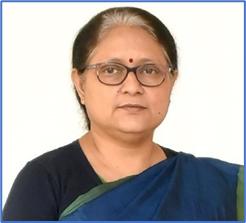
Padma Shri Sanghamitra Bandyopadhyay
Director, Indian Statistical Institute, Kolkata, INDIA
Keynote 1: Artificial Intelligence: Evolution and Current Trends
Biography:
Prof. Sanghamitra Bandyopadhyay did her B Tech, M Tech and Ph. D. in Computer Science from Calcutta University, IIT Kharagpur and Indian Statistical Institute respectively. She then joined the Indian Statistical Institute as a faculty member and became the Director i n 2015. Since 2020 she is continuing in her second tenure as the Director of the Institute. Her research interests include computational biology, soft and evolutionary computation, artificial intelligence and machine learning. She has authored/co-authored several books and numerous journal articles, book chapters, and conference proceedings and has a citation h-index of 62. Prof. Bandyopadhyay has worked in many Institutes and Universities worldwide. She is the recipient of several awards including the Shanti Swarup Bhatnagar Prize in Engineering Science, TWAS Prize, Infosys Prize, JC Bose Fellowship, Swarnajayanti fellowship, INAE Silver Jubilee award, INAE Woman Engineer of the Year award (academia), IIT Kharagpur Distinguished Alumni Award, Humboldt Fellowship from Germany, Senior Associateship of ICTP, Italy, young engineer/scientist awards from INSA, INAE and ISCA, and Dr. Shanker Dayal Sharma Gold Medal and Institute Silver from IIT, Kharagpur, India. She is a Fellow of all the Science and Engineering Academies of India, the Institute of Electrical and Electronic Engineers (IEEE), The World Academy of Sciences (TWAS), International Association for Pattern Recognition (IAPR). She is a member of the Prime Minister of India's Science, Technology and Innovation Advisory Council (PM-STIAC). In 2022, she was conferred the Padma Shri award by the Government of India.
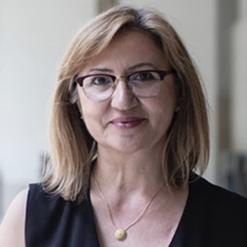
Petia Ivanova Radeva
Universitat de Barcelona, SPAIN
Keynote 2: Do you believe your data when you train a Neural Network?
Abstract:
The creation of large-scale datasets annotated by humans inevitably introduces noisy labels, leading to reduced generalization in deep-learning models. Sample selection-based learning with noisy labels is a recent approach that exhibits promising upbeat performance improvements. The selection of clean samples amongst the noisy samples is an important criterion in the learning process of these models. In this work, we delve deeper into the clean-noise split decision and highlight the aspect that effective demarcation of samples would lead to better performance. We propose a per-class-based local distribution of samples and demonstrate the effectiveness of this approach in having a better clean-noise split. Moreover, we propose a new metric to identify samples that are hard to classify, based on the coincidence score for deep ensembles which measures the agreement of its individual models. We validate the proposed metric using two public food datasets on different backbone architectures and show the improvements compared to the conventional deep neural network training using different performance metrics.
Biography:
Prof. Petia Radeva is a Full professor at the Universitat de Barcelona (UB) and head of the Consolidated Research Group “Artificial Intelligence and Biomedical Applications (AIBA)” at the University of Barcelona. Her main interests are in Machine/Deep Learning and Computer Vision and their health applications. Specific topics of interest: data-centric deep learning, uncertainty modelling, self-supervised learning, continual learning, learning with noisy labelling, multi-modal learning, NeRF, food recognition, food ontology, etc. She was PI of UB in 7 European, 3 international and more than 25 national projects devoted to applying Computer Vision and Machine learning for real problems like food intake monitoring (e.g. for patients with kidney transplants and for older people). She is an Associate Editor in Chief of Pattern Recognition journal (Q1, IP=8.0). She is a Research Manager of the State Agency of Research (Agencia Estatal de Investigación, AEI) of the Ministry of Science and Innovation of Spain. Petia Radeva belongs to the top 2% of the world ranking of scientists with a major impact in the field of TIC, according to the citation indicators of the popular ranking of Stanford. Also, she was selected in the first 6% of the ranking of Spanish and foreign most cited female researchers from any field according to the Ranking of CSIC: https://lnkd.in/djx2Yz5p. Moreover, she was awarded the prestigious “Narcis Monturiol” medal in 2024, IAPR Fellow since 2015, ICREA Academia’2015 and ICREA Academia’2022 assigned to the 30 best scientists in Catalonia for her scientific merits, received several international and national awards (“Aurora Pons Porrata” of CIARP, Prize “Antonio Caparrós” for the best technology transfer at UB, etc). She supervised 26 PhD students and published more than 100 SCI journal publications and in total, >400 international chapters and proceedings, her Google scholar h-index is 55 with >11900 cites.
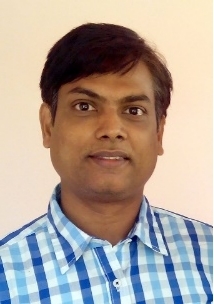
R. Venkatesh Babu
Indian Institute of Science (IISc), Bangalore, INDIA
Keynote 3: Strategies for Debiasing, and Fine-Grained Editing of Diffusion Models
Abstract:
Recent advancements in diffusion-based generative models have enabled the creation of highly realistic images, fuelling applications in generative art, data augmentation, and beyond. Despite their immense potential, controlling these models remains a significant challenge. This talk delves into my team’s efforts to investigate, debias, and enhance the controllability of text-to-image diffusion models. In our first study, we assess whether the outputs of these models reflect a diverse range of global environments or are biased toward a few regions. Through a crowdsourced study we found that the models often default to environments from the United States, Canada, and India, while underrepresenting many other regions. These results highlight the importance of promoting geographical inclusivity in future models. Our second body of work addresses biases in face generation models, particularly their tendency to favour certain demographic subgroups. To mitigate these biases, we propose a novel approach called Distribution Guidance, which operates within the diffusion model's semantically meaningful space to ensure generated images align with a prescribed attribute distribution, all without requiring additional data or retraining. Finally, we explore the use of text-to-image models for fine-grained image editing. While these models offer powerful text-based control, they lack precision in manipulating specific attributes. We introduce a face personalization method that enables high-fidelity, identity-preserving generation with fine control over facial features, along with work that leverages these models to learn human affordances from scene interaction priors.
Biography:
R. Venkatesh Babu is a Professor and Chair of the Department of Computational and Data Sciences (CDS), Indian Institute of Science (IISc), Bangalore. He received his doctoral degree from the Dept. of Electrical Engineering, Indian Institute of Science, Bangalore. He held postdoctoral positions at NTNU, Norway, IRISA/INRIA, Rennes, France, and NTU, Singapore. He is the head of the 'Vision and AI Lab' (VAL) at IISc. His research interests include Computer Vision and Machine Learning. He is a recipient of the SERB Star (2020) and Sathish Dhawan Young Engineer awards (2019). He served as a Program Chair of the AIML-Systems 2023, NCVPRIPG’19 conferences and General Chair of ICVGIP'24 and SPCOM 2020. He is an associate editor of IEEE TPAMI, IEEE TIP, PR and CVIU journals. Prof. Venkatesh serves as an area chair for several top conferences including CVPR, AAAI, NeurIPS, ICLR, ICCV, ECCV, ACCV, WACV, ACML, and AISTATS. He is a senior member of IEEE and AAAI.
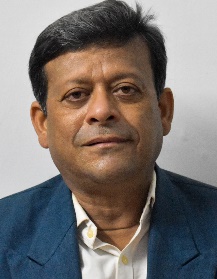
Ujjwal Maulik
Jadavpur University, Jadavpur, Kolkata, INDIA
Keynote 4: Machine Learning for the advancement of healthcare
Abstract:
In this talk first we will discuss current trends in Machine Learning (ML). Subsequently the importance of using Deep Learning (DL), Graph neural network (GNN), and explainable AI will be demonstrated. While DL has been used very successfully for image analysis, GNN is being used extensively for unstructured datasets including biological datasets available in the form of graphs containing the interaction between genes, drugs, diseases etc. ML is used in healthcare with the goal for betterment in therapeutic as well as early diagnosis of diseases. Moreover, generally the same therapies are used for patients having similar diseases. However, based on the biological conditions of a patient, use of specific therapy is the key in precision medicine. In the second part of the lecture, the discussion will be made on how DL and GNN techniques can be used for developing improved healthcare systems including precision medicine. The importance and the challenges will also be discussed to address the practical issues in the medical expert system.
Biography:
Dr. Ujjwal Maulik is a Professor in the Dept. of Comp. Sc. and Engg., Jadavpur University since 2004. He was also the former Head of the same Department. He also held the position of the principal in charge and the Head of the Dept. of Comp. Sc. and Engg., Kalayni Govt. Engg. College. Dr. Maulik has worked in many universities and research laboratories around the world as visiting Professor/ Scientist including Los Alamos National Lab., USA in 1997, Univ. of New South Wales, Australia in 1999, Univ. of Texas at Arlington, USA in 2001, Univ. of Maryland at Baltimore County, USA in 2004, Fraunhofer Institute for Autonome Intelligent Systems, St. Augustin, Germany in 2005, Tsinghua Univ., China in 2007, Sapienza Univ., Rome, Italy in 2008, Univ. of Heidelberg, Germany in 2009, German Cancer Research Center (DKFZ), Germany in 2010, 2011 and 2012, Grenoble INP, France in 2010, 2013 and 2016, University of Warsaw in 2013 and 2019, University of Padova, Italy in 2014 and 2016, Corvinus University, Budapest, Hungary in 2015 and 2016, University of Ljubljana, Slovenia in 2015 and 2017, International Center for Theoretical Physics (ICTP), Trieste, Italy in 2014, 2017 and 2018. He is the recipient of Alexander von Humboldt Fellowship during 2010, 2011 and 2012 and Senior Associate of ICTP, Italy during 2012-2018 and Fulbright Fellowship in 2024-2025. He is the Fellow of Indian National Academy of Engineers (INAE), India, National Academy of Science India (NASI), International Association for Pattern Recognition (IAPR), USA, The Institute of Electrical and Electronics Engineers (IEEE), USA and Asia-Pacific Artificial Intelligence Association (AAIA), Hongkong. He is also the Distinguish Member of the ACM. He is a Distinguish Speaker of IEEE as well as ACM. His research interest includes Machine Learning, Pattern Analysis, Data Science, Bioinformatics, Multi-objective Optimization, Social Networking, IoT and Autonomous Car. In these areas he has published ten books, more than four hundred papers, mentoring several start-ups, filed several patents and already guided twenty-five doctoral students. His other interest includes mentoring young students, traveling extensively around the globe, outdoor Sports and Classical Music.
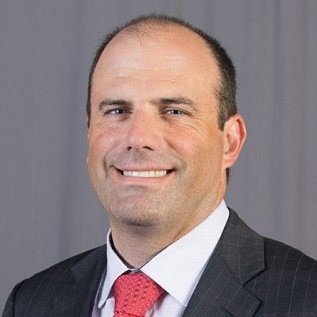
Robert W. Heath
University of California, San Diego, USA
Keynote 5: Advancements and Opportunities in Next-Generation MIMO Wireless Communication for 6G
Abstract:
MIMO (multiple-input multiple-output) wireless communication has been an instrumental technology in fourth and fifth generation cellular communication systems. With more aggressive performance targets, the evolution of MIMO is essential to support more antennas, accommodate larger bandwidths and exploit higher carrier frequencies. In this talk, I will describe three areas of opportunity for the next generation of MIMO wireless communications. First, I will discuss the need for methods to model and analyze large arrays. Second, I will motivate the need for new methods to reconfigure the antennas in those arrays. Finally, I will make the case for data-driven algorithms to adaptively configure these new MIMO systems. Throughout the presentation, I will emphasize the importance of revisiting classical models and assumptions.
Biography:
Robert W. Heath Jr. is the Charles Lee Powell Chair in Wireless Communications at the University of California, San Diego. Previously, he was the Lampe Distinguished Professor at the North Carolina State University, and the Cockrell Family Regents Chair in Engineering at The University of Texas at Austin. He authored "Introduction to Wireless Digital Communication” (Prentice Hall in 2017) and "Digital Wireless Communication: Physical Layer Exploration Lab Using the NI USRP” (National Technology and Science Press in 2012). He co-authored “Millimeter Wave Wireless Communications” (Prentice Hall in 2014) and "Foundations of MIMO Communications" (Cambridge 2019). He was a member-at-large of the IEEE Communications Society Board-of-Governors (2020-2022) and a member-at-large on the IEEE Signal Processing Society Board-of-Governors (2016-2018). He was EIC of IEEE Signal Processing Magazine from 2018-2020. He is a licensed Amateur Radio Operator, a registered Professional Engineer in Texas, a Private Pilot, and a Fellow of the National Academy of Inventors, the AAAS and the IEEE.
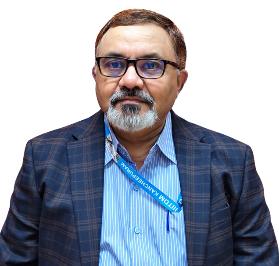
M.V. Kartikeyan
Director, IIITDM-Kancheepuram, INDIA
Keynote 6: RF Simulation Tools for Modern Communications and Advanced ISM Applications
Abstract:
Radio Frequency (RF) simulation tools serve as a crucial bridge between ideas and product development, providing validation during the development process. These tools are essential to design, analyze, and optimize RF systems and circuits, including amplifiers, mixers, antennas, filters, and couplers under realistic operating conditions. RF components can be modeled, and their performance metrics can be predicted using these tools, such as gain, noise figure, efficiency, and signal integrity. By incorporating electromagnetic solvers developed based on analytical and numerical methods such as the Finite Element Method (FEM), Finite Difference Time Domain (FDTD), and Method of Moments (MoM), RF simulation tools facilitate the iterative design process to reduce the need for physical prototypes, and help identify potential issues early in the development cycle. Several simulation tools have been developed for RF behavior prediction; some are open source, and commercial tools have been developed to satisfy industry standards. Recently developed advanced optimization techniques can be integrated into these tools to apply AI/ML techniques for optimization. This integration is especially beneficial in terms of accelerating the design process, improving accuracy and computational efficiency, and reducing the number of necessary simulations in the product development process. These abstract reviews the critical features of RF simulation tools and the theoretical basis for their development in detail. It briefly examines both open-source and commercially available simulation tools that can be utilized in various design projects for modern communication systems and for advanced ISM applications. A detailed comparison of these tools based on meshing algorithms, operating system demands, 3D GUI availability, and supported numerical methods is presented, which guides the selection of appropriate tools depending on specific project requirement. It also gives a brief insight into the application of the tools across industries and their role in accelerating innovation by supporting high-frequency system design in increasingly complex environments.
Biography:
Prof. M.V. Kartikeyan received Master of Science and Ph.D. degrees specializing in Advanced Electronics & Radio Physics and Microwave Engineering from Banaras Hindu University and IIT-BHU, Varanasi, India, in 1985 and 1992, respectively. He has around 34 years of R&D experience at Central Electronics Engineering Research Institute (CEERI), Pilani, Institut für Hochleistungsimpuls- und Mikrowellentechnik (IHM), Karlsruhe Institute of Technology (KIT), Germany, Indian Institute of Technology Roorkee, Indian Institute of Technology Tirupati, and IIITDM-Kancheepuram, India IN 2020, he moved to IIT-Tirupati on deputation. At present, he is the Director of IIITDM-Kancheepuram, since October 2022. Prof. Kartikeyan is the principal author of 5 books. He has published more than 350 research papers in peer reviewed transactions/journals and conferences. His current research interests include high power millimeter wave and terahertz sources; RF Circuits, Antennas and Systems; Metamaterials and fractals; Computational Electromagnetics; and RF and microwave design with soft computing and machine learning techniques. Prof. Kartikeyan is a Fellow of IEEE, INAE, IET, VEDS, IE, and IETE Prof. Kartikeyan served as a member of the Vacuum Electronics Technical Committee of IEEE Electron Devices Society during 2018-2021. Since 2022, he is serving VETC as a corresponding member. He is in the Editorial Board of the International Journal of Microwave and Optical Technology (IJMOT). He is a recipient of the Hildegard-Maier Research Fellowship for Electrical Sciences of the Alexander von Humboldt Foundation (1998-2000) and the Alexander von Humboldt Research Fellowship (2001-2003, 2011, 2012).
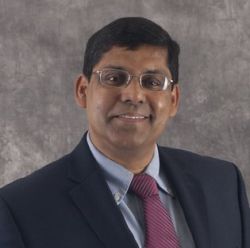
Sajal Das
Missouri University of Science and Technology, USA
Keynote 7: From Smart Sensing to Smart Living: The Era of IoT, AI/ML and Data Science
Abstract:
We live in an era in which our physical and cyber environments are becoming increasingly intertwined and smarter due to the advent of sensors, Internet of Things (IoT), wireless communications, pervasive computing, and intelligent control technologies. A wide variety of IoT and smart devices (including smartphones), with human in the loop, are employed to sense and collect fine-grained data about events of interest, resulting in actionable inferences and decisions. This synergy has led to the cyber-physical-human (CPH) convergence in smart living environments (e.g., smart homes/cities, smart grid, smart transportation, smart manufacturing, smart health, smart agriculture), the goal of which is to improve the quality of life. However, CPH and IoT systems pose significant challenges due to the scale, heterogeneity, resource limitations, behavioral randomness, security, privacy, and trust issues. This talk will highlight unique challenges, novel frameworks, and models to realize secure and trustworthy smart living systems. The novel approaches will be based on sound theoretical and practical design principles, such as AI/ML, data analytics, sensor fusion, uncertainty reasoning, information theory, prospect theory, reputation/belief models, graph theory, and game theory. Real-world case studies and experimental results will be presented for several smart systems. The talk will be concluded with directions of future research.
Biography:
Dr. Sajal K. Das is the Curators’ Distinguished Professor and Daniel St. Clair Endowed Chair in Computer Science at Missouri University of Science and Technology, where he was the Chair of Computer Science Department during 2013-2017. He also served the US National Science Foundation (NSF) as a Program Director in the Computer and Network Systems Division. His broad interdisciplinary research spans cyber-physical systems, IoT, drones, cybersecurity, applied machine learning, data science, wireless and sensor networks, mobile and pervasive computing, smart environments, edge-cloud continuum, parallel computing, social and biological networks, applied graph theory and game theory. He has made fundamental contributions to these areas and published extensively in top-tier venues (more than 350 journal articles and more than 450 peer-reviewed conference papers). Dr. Das coauthored 60 book chapters and 4 books – Smart Environments: Technology, Protocols, and Applications; Handbook on Securing Cyber-Physical Critical Infrastructure: Foundations and Challenges; Mobile Agents in Distributed Computing and Networking; and Principles of Cyber-Physical Systems: An Interdisciplinary Approach. A holder of 5 US patents, he directed over USD $24 million funded research projects. His h-index is 101 with more than 43,000 citations according to Google Scholar. Dr. Das serves as an Associate Editor of IEEE Transactions on Sustainable Computing, IEEE Transactions on Dependable and Secure Computing, ACM Transactions on Sensor Networks, ACM/IEEE Transactions on Networking, and Journal of Parallel and Distributed Computing. A (co)-founder of IEEE PerCom, WoWMoM, SMARTCOMP and ACM ICDCN conferences, he has served as General and Program Chair of reputed conferences. Dr. Das is a recipient of several awards including University of Missouri System President’s Award for Sustained Career Excellence. Dr. Das is a a Fellow of the IEEE, National Academy of Inventors (NAI), and Asia-Pacific Artificial Intelligence Association (AAIA).